
📣 Call for Volunteers — Digital Freedom Foundation
Join the team behind Software Freedom Day
About the Digital Freedom Foundation
The Digital Freedom Foundation (DFF) organizes Software Freedom Day (SFD) and other events promoting free and open source software worldwide. SFD has grown from 23 registered events in 2023 to over 100 locations in 2025 — and we're not stopping there.
We are a small, fully volunteer-run board operating in English as our shared working language. Most of us are not native speakers, and that's perfectly fine.
We are looking for new board members
Board seats are not indefinite commitments. We designed it that way on purpose. We're now looking for people ready to step in for at least one year and help shape the next chapter of Software Freedom Day.
What board membership involves
Strategy & governance
-
Collective decision-making on the direction of SFD and other DFF events
-
Helping determine and establish the long-term legal structure and home of the foundation
-
Upholding and enforcing the code of conduct
Meetings & communication
-
Attending a monthly online board meeting (typically ~1 hour, occasionally up to 90 minutes)
-
Being present and responsive in the DFF Matrix channel throughout the year
-
Helping prepare meeting agendas and taking notes on a rotating basis
Financial oversight
-
Managing the annual budget and tracking expenditure
-
Handling sponsor invoicing and receipts
-
Ensuring financial transparency as required by the foundation's legal structure
Event stewardship
-
Setting the annual SFD date and announcing it to the global community in good time
-
Overseeing swag production, procurement, and shipping logistics
-
Managing the event registration platform for local organizers
Legal & compliance
-
Maintaining the foundation's legal status and meeting any filing requirements
-
Keeping the foundation compliant with the jurisdiction it operates under
No prior board experience required — just commitment, good faith, and an interest in software freedom. Most tasks are shared across the board rather than owned by one person.
We also welcome non-board volunteers
You don't need to become a board member to contribute. The following tasks are already happening, and extra hands are genuinely welcome:
| Area | What's involved |
|---|---|
| Sponsorship | Finding and approaching global sponsors |
| Community outreach | Reaching out to local teams, encouraging early registration, welcoming new organizers |
| Content | Writing blog posts for the DFF website |
| Social media | Posting, sharing, engaging around SFD and FOSS topics |
| Infrastructure | Maintaining Nextcloud, mail, and the Joomla site |
| Communications | Helping with press outreach and partner organization relationships |
Pick one, pick several — whatever fits your availability.
Who should apply?
Anyone who believes in software freedom and wants to contribute practically. We especially encourage people to apply who:
-
Have organized or participated in a local SFD event
-
Have experience with FOSS communities, outreach, or communications
-
Have a background in finance, law, or non-profit governance (these skills are particularly valuable at board level)
-
Want to get more involved but weren't sure how
How to get in touch
Send a short message introducing yourself and the role(s) you're interested in to the DFF board. Tell us a little about your background and what draws you to this work.
💬 Or chat with us on Matrix: #digitalfreedoms:matrix.org
🗓️ Application deadline: April 4th.

Abraçando os Princípios de Código Aberto da ONU: Por que a Digital Freedom Foundation Endossa Esta Iniciativa Importante
A Digital Freedom Foundation (DFF) tem o orgulho de endossar os Princípios de Código Aberto das Nações Unidas. Como defensores históricos da liberdade de software, da transparência e da privacidade, consideramos que esses princípios estão profundamente alinhados com os ideais que promovemos ativamente há décadas.
Em março de 2025, dezesseis organizações — incluindo a Open Source Initiative — uniram-se para endossar os Princípios de Código Aberto da ONU. Esses princípios oferecem diretrizes práticas para que organizações em todo o mundo utilizem soluções de código aberto de maneira colaborativa e sustentável no enfrentamento de desafios globais.
Na DFF, vemos esses princípios como uma evolução natural e essencial dos valores centrais da liberdade de software. Embora a Free Software Foundation tenha lançado as bases filosóficas com suas quatro liberdades fundamentais, os Princípios da ONU representam uma reafirmação moderna e global desses ideais, traduzidos em ação prática.
Por que Esses Princípios São Importantes
A Digital Freedom Foundation tem promovido a abertura e a transparência no desenvolvimento de software há décadas, incentivando comunidades e instituições a adotarem a liberdade de software na prática. Os Princípios de Código Aberto da ONU reforçam e ampliam esses valores, tornando a liberdade de software não apenas um ideal filosófico, mas uma necessidade prática.
Vamos explorar cada princípio e por que os apoiamos de forma tão firme:
1. Aberto por Padrão
"Tornar o código aberto a abordagem padrão para projetos."
Desde sempre, a DFF defende que a abertura deve ser o padrão, não a exceção. Este princípio garante transparência, auditabilidade e colaboração desde o início, permitindo que as pessoas tenham controle real sobre o software que utilizam.
2. Contribuir de Volta
"Incentivar a participação ativa no ecossistema de código aberto."
A participação ativa fortalece as comunidades e acelera a inovação. Ao endossar este princípio, destacamos a importância de que quem se beneficia do código aberto também contribua, compartilhando melhorias e conhecimentos — algo que promovemos desde nossa origem.
3. Seguro por Design
"Fazer da segurança uma prioridade em todos os projetos de software."
Segurança e liberdade caminham juntas. Software projetado com segurança desde o início protege a privacidade e a autonomia dos usuários — princípios fundamentais para a DFF. A confiança no software livre depende disso.
4. Fomentar Participação Inclusiva e Construção de Comunidade
"Permitir e facilitar contribuições diversas e inclusivas."
Liberdade de software real precisa ser acessível a todos. A DFF sempre promoveu comunidades abertas e inclusivas, onde todos podem participar, aprender e contribuir — independentemente da origem, identidade ou localização geográfica.
5. Projetar para Reutilização
"Projetar para interoperabilidade entre plataformas e ecossistemas."
Software reutilizável e interoperável potencializa o impacto do código aberto. Esse princípio garante que os benefícios da liberdade de software se espalhem por diferentes contextos, maximizando o valor de cada projeto.
6. Fornecer Documentação
"Oferecer documentação completa para usuários finais, integradores e desenvolvedores."
Documentação é a ponte entre liberdade teórica e prática. Sem ela, o conhecimento fica inacessível. Desde o início, a DFF enfatiza que documentação clara e acessível é essencial para que todos possam realmente usar, adaptar e melhorar o software.
7. RISE (Reconhecer, Incentivar, Apoiar e Empoderar)
"Empoderar indivíduos e comunidades para participação ativa."
Empoderamento sempre foi central na missão da DFF. Reconhecer e apoiar contribuidores fortalece comunidades e garante continuidade. Este princípio sustenta uma cultura de liberdade que é vibrante e duradoura.
8. Sustentar e Escalar
"Apoiar soluções que atendam às necessidades em evolução do sistema da ONU e além."
Soluções sustentáveis e escaláveis garantem que a liberdade de software permaneça relevante com o passar do tempo. A DFF sempre promoveu abordagens com visão de longo prazo, que respondem às necessidades reais de pessoas e instituições.
Continuando o Legado da Liberdade de Software
A Free Software Foundation definiu as quatro liberdades fundamentais do movimento de software livre, que ainda hoje formam sua base filosófica:
-
Liberdade 0: Executar o programa para qualquer propósito.
-
Liberdade 1: Estudar como o programa funciona e adaptá-lo às suas necessidades.
-
Liberdade 2: Redistribuir cópias para ajudar outras pessoas.
-
Liberdade 3: Melhorar o programa e compartilhar suas melhorias com os outros.
Os Princípios da ONU não apenas se alinham a essas liberdades — eles os ampliam, tornando-os aplicáveis em escala global e institucional. Eles são, na essência, liberdade de software colocada em prática.
Por que a DFF Endossa com Orgulho Esses Princípios
A Digital Freedom Foundation promove a liberdade de software, a colaboração aberta e a soberania digital há décadas. Os Princípios de Código Aberto da ONU estão perfeitamente alinhados com essa missão. Eles não apenas reconhecem o valor estratégico do software livre, mas também oferecem um caminho claro para implementá-lo de forma ética, inclusiva e sustentável.
Ao endossar esses princípios, reafirmamos nosso compromisso de longa data com a liberdade digital — e convidamos governos, comunidades e organizações a se unirem a nós.
Junte-se a nós nessa jornada. Vamos garantir que a liberdade de software floresça — agora e no futuro.
Se quiser, posso também preparar uma versão Markdown ou HTML pronta para publicação. Deseja isso?


Sobre a Digital Freedom Foundation
A Digital Freedom Foundation é uma organização sem fins lucrativos responsável por organizar celebrações mundiais como o Software Freedom Day, Document Freedom Day e Hardware Freedom Day. A fundação está legalmente abrigada sob a caridade Earth Cause, uma 501(c)(3), permitindo que doações sejam dedutíveis de impostos nos EUA.
Visão
A nossa visão é capacitar todas as pessoas a se conectarem, criarem e compartilharem livremente em um mundo digital que seja participativo, transparente e sustentável.
Objetivos
- Celebrar a liberdade do software e as pessoas por trás dela
- Fomentar uma compreensão geral das liberdades digitais e incentivar a adoção de software livre, hardware livre e normas abertas
- Criar um acesso mais igualitário às oportunidades através do uso de tecnologias participativas
- Promover um diálogo construtivo sobre responsabilidades e direitos na sociedade da informação
- Ser inclusivo de organizações e indivíduos que compartilham nossa visão
- Ser pragmático, transparente e responsável como organização
Equipa principal
- Laura Michaels (lm8)
- Chris Valachovic
- Ruwan Ranganath
- Jan Husar / Earth Cause
- Jurgen Gaeremyn
- Joseph Samuels
Quer se envolver?
- Você pode subscrever a nossa lista de discussão.
- Entre em contato conosco em nosso canal Matrix.
- Você pode visualizar os arquivos da lista de discussão.
- Você pode mostrar seu apoio seguindo-nos no Mastodon.
- Envie suas perguntas através do formulário de contato.


About DFF
Started in 2004 to promote Free Software with Software Freedom Day, the Digital Freedom Foundation is part of the Earth Cause charity in the USA, and at the origin of Software Freedom Day, Education Freedom Day and Hardware Freedom Day. The name change came progressively starting in 2011 in order to reflect the changes in our directions and also because we had to change registration territory.
In 2016 DFF has taken the responsibility of running the Document Freedom Day to promote open standards to each corner of the world.
Our Scope
DFF has transitioned over the past ten years from a marketing events organizer to advocate the user of Free Software to an organization which has broaden its scope to digital knowledge in general covering free software, open hardware and content (OER, free culture), and assembled or created all the required pieces to drive an educational project aimed at educating the people in needs.
As a worldwide organization with hundreds of local groups and associations taking part in our efforts, we hope to extend our reach into the Open Education field to every corner of the world in the long run.
DFF handles sponsorship contracts, official team registrations, sending out schwags to teams, the annual Best SFD Event Competition, and marketing Software Freedom Day, Document Freedom Day, Education Freedom Day and Hardware Freedom Day. Hundreds of teams around the world manage the local celebrations and help to send out an educational global message. So do drop by and attend an SFD, DFD, EFD and HFD events nearby!
Our Vision
Our vision is to provide access to knowledge via technology in which everybody can participate and learn from.
Our mission
The mission of the DFF is to meet a tremendous need for technology in today's society by providing computes equipped with Free Software, content and a curriculum which can equally serve young children in needs, adult looking for a knowledge upgrade or anyone else interested.
All the software and content is available online and created together together with interested parties including the teachers providing the classes so that anybody can reuse the solution and adapt it to anywhere else.
Through its international days DFF encourages local communities around the world to educate the general public about the movement and bring the message forward.
Board
DFF is run by a Board who meets regularly in a Matrix conference to discuss various topics pertaining to the regular activities of Digital Freedom Foundation. For communication with the community, we make use of a mailing list.
How did DFF (SFI) begin?
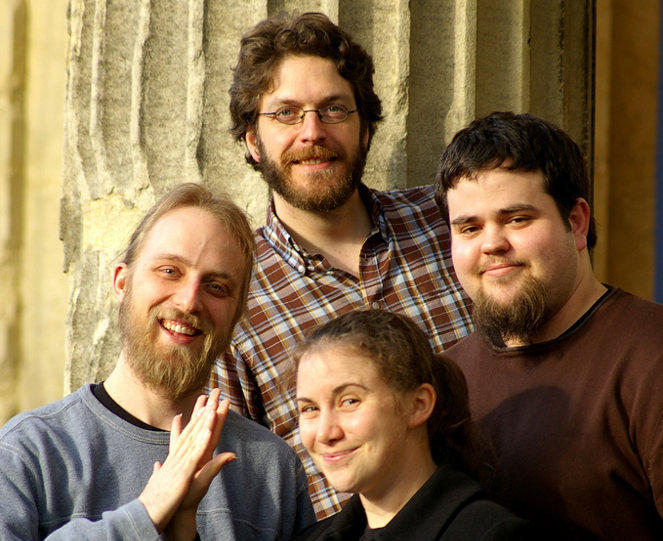
Sometime in January of 2004, Matt Oquist concluded that...
- Free Software had improved to the point of being suitable for public use, and
- Public ignorance was one of the primary roadblocks to public acceptance.
He remembers driving past a retail store that he knew had piles of AOL CDs lying around, and he thought to himself that a CD filled with software such as Open Office, Firefox, and the GIMP would be of vastly greater value to the public. He planned to burn such CDs and try to get permission to distribute them at the retail store in question.
After contacting his local LUG regarding this idea he was referred to TheOpenCD project, which maintains a CD of high-quality Free Software for Windows that matched Matt's (so far vague) vision. Matt proposed the idea of an international day of handing out Free Software CDs in TheOpenCD forums, and project leader Henrik Omma and project contributor Phil Harper both shared this vision and began collaborating immediately. After considering several proposals of dates, names, and logistics, Henrik, Phil, and Matt agreed on "Software Freedom Day" because they believed that ultimately, everyone without a vested interest in proprietary software can unite to educate the worldwide public about the ideals of Software Freedom and the practical benefits of Free Software. August 28th, 2004, was the first annual Software Freedom Day.
Henrik, Phil, and Matt recruited Fred Noronha and Jules Sidenburg to have the required total of five board members to found a non-profit corporation in the state of New Hampshire, USA.
Since that time the board has been pleased to welcome Sidsel Jensen, Joe O.A Olutuase, Benjamin Mako Hill, Robert Schumann, Pia Waugh, Frederic Muller, Pockey Lam, Patrick Sinz, Julien Forgeat and many more who bring a wealth of energy and experience to the organization.
Digital Freedoms, Education Freedom Day and more to come...
Software Freedom International, started in 2004 to promote Free Software with Software Freedom Day. With Frederic Muller being SFI President since 2010, he came up with an idea of operating SFI under the name of Digital Freedom International. It is without a doubt that the Free Software movement has spread to new territories beyond the realm of software itself but intimately linked and equally important to Free Software. The teams celebrating SFD have gradually taken note of this phenomenon over the previous years and need to adopt new strategies as both the audience and the subject matters are very spread in nature.
Since then, DFF launched Culture Freedom Day, Hardware Freedom Day and Education Freedom Day as additional days to raise awareness of open educational resources and open licenses of any creative work and content.
Upcoming Greenboard deployments
Over the past few months we have been busy introducing the Greenboard project in a few places, namely at Teach for China in Shantou and at FOSSASIA in Phnom Penh to name just two places. Both have been very interested in the concept, its flexibility, past deployments and more importantly using it within their environment.
We are now working on refurbishing a classroom of sixty computers in a school not too far from Shantou, classroom which was installed ten years ago and has never ever been used. Of course not all the machines start (in fact only 15 out of 60) but the room is properly set up and looks like a very nice place to start in the region. The people we are working with from Teach for ChinaTeach for China are very motivated as well which brings a lot to the equation.
On the Cambodian side, the discussions we had with USAID and the representative from the Ministry of Education were very positive too. We will have further discussions during April and need to start checking the translation status of all the components we use. Luckily the person in charge of packaging Greenboard happens to be Cambodian too!
All in all we are pretty excited about what's coming ahead of us and will work hard to make it happen. Stay connected to learn more as the projects move forward!
Mais Artigos …
Página 1 de 2